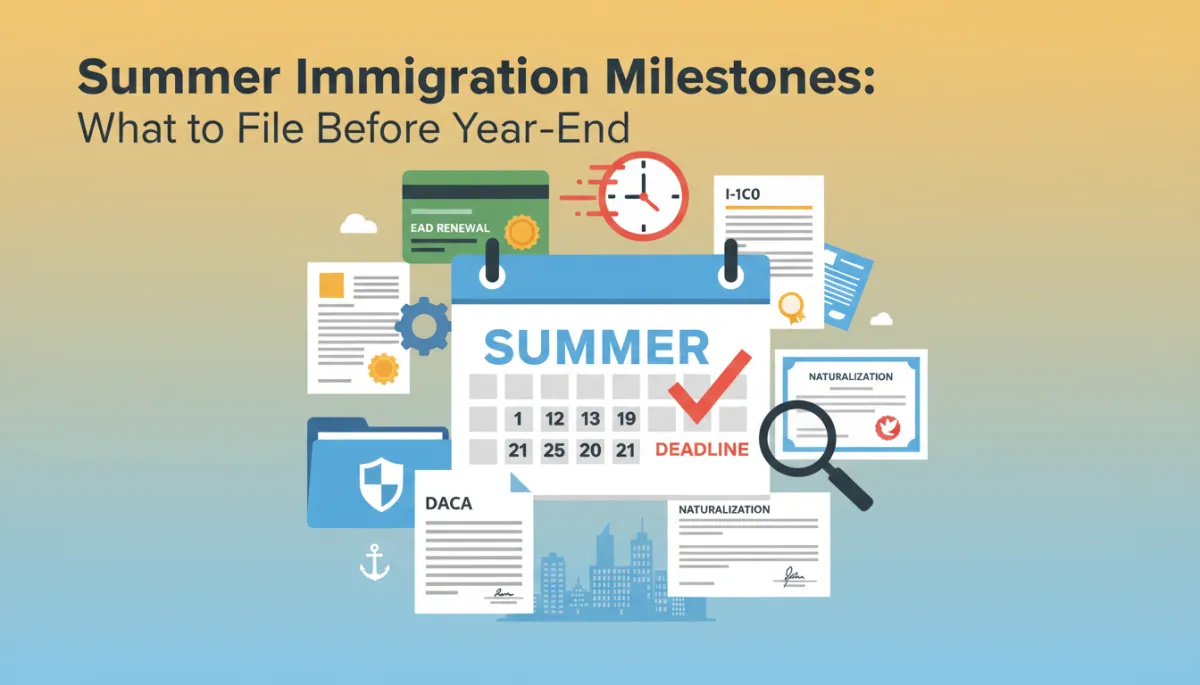
Key Immigration Milestones Before Year-End
Immigration, Taxes, Fort Worth Community
Summer Immigration Milestones: What to File Before Year-End
For many Hispanic and immigrant families in Fort Worth, summer is more than vacations and barbecues. It is the perfect season to organize important immigration filings before the rush of the holidays and the start of a new tax year. Planning now can protect your work authorization, your residency, and even your family’s financial future.

Why Summer Is the Ideal Time to Act on Immigration Filings
Every year, families in Tarrant County feel the pressure of last‑minute immigration filings. By using the summer months to prepare, you can avoid stress and reduce the risk of gaps in your status or work authorization. Current USCIS processing times can stretch for many months, and the agency itself recommends applying early for many benefits, such as filing EAD renewals up to 180 days before expiration. Checking the official USCIS website for updated processing times is always wise, but planning ahead is even better.
Summer is also a smart time to move because fall and winter bring holiday delays. Offices close for Thanksgiving, Christmas, and New Year’s, and mail can slow down. Families travel, kids return to school, and it becomes harder to gather documents or attend appointments. By treating June through September as your season for summer immigration milestones Fort Worth, you give your applications a head start before December 31.
1. Work Permit (EAD) Renewals: Protect Your Income
For many Fort Worth families, the Employment Authorization Document (EAD) is the key to stable work and income. USCIS guidance suggests filing renewals up to 180 days before your current card expires. Waiting until the last minute can risk a gap in work authorization, which may affect your job, your benefits, and even your ability to support your family during the holidays.
- Review your EAD card now and note the expiration date.
- Aim to file your EAD renewal Fort Worth application at least 4–6 months before that date.
- Gather updated photos, copies of your current card, and proof of your underlying status.
Some categories may qualify for automatic extensions if you file on time, but not all. Sitting down in summer with a local professional, such as the bilingual team at IKAR Tax and Investments Inc in Fort Worth, can help you understand which rules apply to your situation and how EAD timing connects with your job and tax planning.
2. DACA Renewals: Staying Ahead in a Changing Program
DACA recipients are used to living with uncertainty, and policy changes can make it even more stressful. General guidance has often encouraged filing DACA renewals about 120–150 days before expiration. Summer is the ideal window to review your renewal date, check current USCIS instructions, and prepare your forms and fees so you are not rushing in late fall when offices and mail services slow down.
For many “Dreamers” in North Texas, DACA is tied directly to work authorization and the ability to support parents, siblings, and children. Reviewing your case with a trusted Fort Worth immigration services provider can also be a chance to explore whether you might qualify for another pathway, such as a family petition, marriage-based case, or future residency option.
3. Green Card Renewals: Keeping Your Status Current in Texas
Permanent residents sometimes forget that their green card has an expiration date, even though their status is ongoing. For many, that card is valid for 10 years. For conditional residents (for example, some marriage-based cases), it may be valid for only 2 years. A timely green card renewal Texas filing protects your ability to work, travel, and renew your driver’s license or ID in Texas without interruption.
- If your card expires in the next 6–12 months, summer is the time to prepare your renewal.
- Conditional residents must file to remove conditions within very specific windows; missing that deadline can be serious.
Because USCIS processing times can be long, renewing before year-end helps avoid complications with upcoming travel, job changes, or Real ID requirements. A local firm that understands both immigration and taxes Fort Worth families face can also help you decide whether it is time to begin your journey toward citizenship.

Organizing documents in summer makes year-end immigration and tax planning smoother and less stressful.
4. Naturalization Applications: Start Your Citizenship Journey
Applying for U.S. citizenship is one of the most meaningful milestones for immigrant families. Because naturalization cases can take many months, starting in summer gives you time to gather documents, prepare for the English and civics tests, and plan around work and school schedules. Filing as part of your immigration filings before year-end strategy can also position you well for future elections, travel plans, and financial decisions.
A bilingual advisor can help you review eligibility requirements, such as continuous residence, physical presence, and any past criminal or tax issues that may need attention before filing. This is where the connection between immigration and taxes Fort Worth becomes especially important: unpaid taxes, missing returns, or inconsistent income reporting can complicate a citizenship case if not handled correctly in advance.
5. TPS Renewals: Staying Ready for Designation Changes
Many families in the Fort Worth area rely on Temporary Protected Status (TPS) for safety and work authorization. TPS designations and re‑registration periods are time‑sensitive and can change depending on your country. When DHS announces a new extension or re‑registration window, acting quickly is essential. Summer is a good time to confirm your current expiration dates, read official notices, and gather proof of identity, residence, and any required updates for your next TPS renewal.
Because TPS often ties directly to EAD eligibility, missing a re‑registration window can impact both your status and your ability to work. Partnering with a local office that tracks USCIS deadlines Fort Worth families care about can make sure you do not miss important announcements that affect your life and income.
6. Family Petition Status Checks: Planning for Loved Ones
Many Hispanic families in North Texas have relatives abroad or in other states waiting on family-based petitions. Summer is a great time to sit down with your paperwork and check the status of I‑130 petitions, priority dates, and consular processing steps. Reviewing the Visa Bulletin, confirming that USCIS has your correct address, and organizing civil documents now can prevent last‑minute scrambling when your case finally moves forward.
- Confirm your receipt numbers and keep copies of all notices in a safe folder.
- Check case status online and note any requests for evidence or missing items.
- Coordinate with relatives abroad to ensure passports and civil records are ready when needed.
A local bilingual team such as IKAR Tax and Investments can help you interpret confusing notices, track timelines, and integrate family petition planning with your broader financial goals in Fort Worth.
7. How Immigration Status Changes Affect Your Taxes
Immigration and tax planning are deeply connected. Changes such as obtaining a new EAD, adjusting status to permanent resident, or becoming a U.S. citizen can affect how you file taxes, claim dependents, report foreign income, or qualify for certain credits. For example, moving from using an ITIN to a Social Security number, or changing your filing status after marriage, may require careful coordination so the IRS and USCIS records stay consistent.
Handling these details correctly can strengthen your immigration case and protect your family’s finances. That is why many families choose a trusted local firm that understands both sides of the equation—IKAR Tax Fort Worth combines bilingual tax expertise with immigration services to guide families through these transitions. When you plan your immigration filings before year-end, it is smart to review your tax situation at the same time so there are no surprises when filing season arrives.
Bringing It All Together for Fort Worth Families
When you look at the full picture—EAD renewals, DACA renewals, green card renewals, naturalization applications, TPS renewals, and family petition status checks—it can feel overwhelming. But breaking it into seasonal steps makes it manageable. Use summer to organize documents, review expiration dates, and talk with a professional about how your immigration status and taxes interact. Then you can move into the fall and holiday season with more peace of mind, knowing you are ahead of key deadlines and better prepared for the new year.
For Fort Worth residents, having a bilingual, community‑focused team nearby can make a big difference. IKAR Tax and Investments Inc serves local families from their convenient office at 4200 South Fwy., Suite 2520, Fort Worth, TX 76115, offering both immigration guidance and tax planning under one roof. Whether you need help understanding USCIS letters, preparing forms, or aligning your filings with future financial goals, you can visit ikartaxandinvestments.com or call (817) 305-3433 to schedule a bilingual consultation. Many families also like to check reviews and directions on IKAR Tax and Investments on Google before stopping by. Taking these steps during the summer months helps ensure that when December 31 arrives, your immigration milestones and your family’s financial plans are moving forward together with confidence.
