
Quarterly Estimated Taxes: What Fort Worth Self-Employed Texans Need to Know Before September 15
Tax & Financial Services, Self-Employed, Fort Worth
Quarterly Estimated Taxes: What Fort Worth Self-Employed Texans Need to Know Before September 15
The Q3 2026 estimated tax deadline is almost here. If you are self-employed in Fort Worth and haven’t planned for your September 15 payment yet, you still have time to get organized, avoid penalties, and protect your cash flow with a clear strategy.
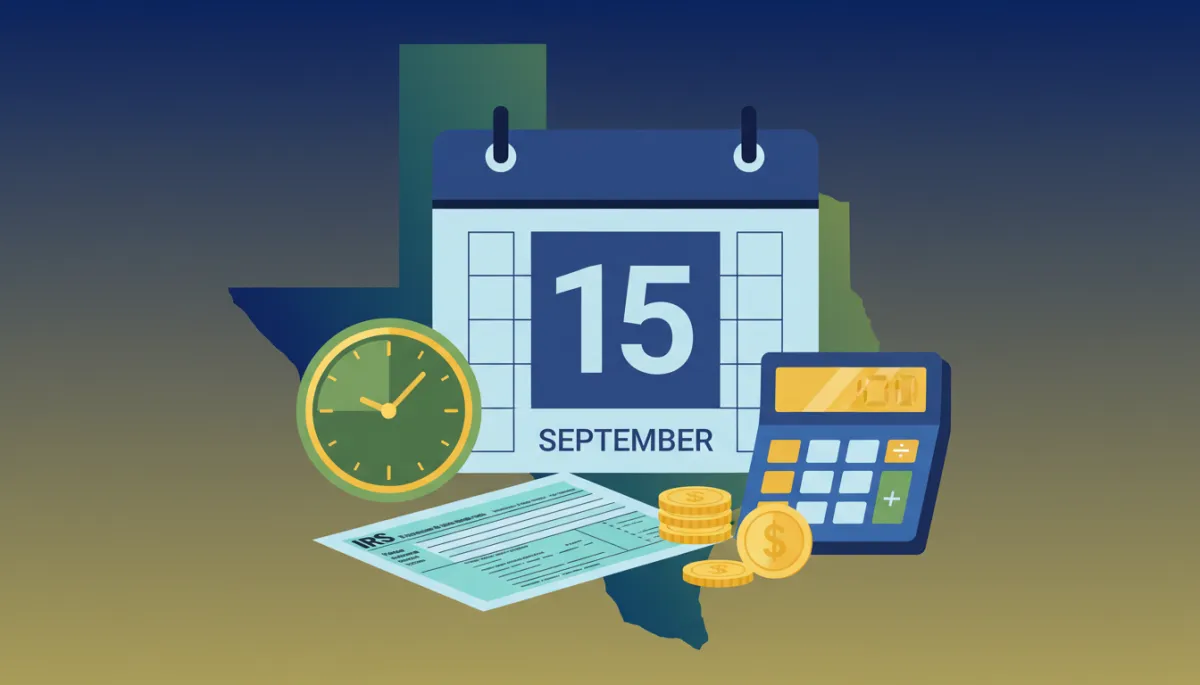
For many Fort Worth freelancers, gig workers, and small business owners, quarterly estimated taxes feel confusing or easy to put off. Yet the IRS treats these payments as a “pay-as-you-go” system for federal income and self-employment taxes. Understanding how they work can save you money, stress, and surprise bills next spring.
Who in Fort Worth Needs to Pay Quarterly Estimated Taxes?
The IRS generally requires estimated tax payments if you expect to owe at least $1,000 in tax for the year after subtracting any withholding and refundable credits (see IRS Estimated Taxes, Publication 505). In Fort Worth, this often includes:
- Freelancers and consultants (designers, writers, IT professionals, marketing specialists, and more)
- Gig workers and platform earners (rideshare drivers, delivery app workers, online sellers, tutors)
- Sole proprietors and single-member LLC owners operating local Fort Worth businesses
- 1099 independent contractors in construction, real estate, healthcare, and professional services
- Partners and S corporation shareholders who receive pass-through income without enough withholding
If you rely primarily on 1099 income in Fort Worth and do not have taxes withheld from your pay, you are likely responsible for quarterly estimated payments. Ignoring them until April can lead to underpayment penalties and a much larger balance due than you expect.
Why Texas Self-Employed Workers Get Caught Off Guard
Living and working in Texas comes with a major perk: there is no state income tax. Unfortunately, that can create a false sense of security when it comes to federal obligations. Many Fort Worth entrepreneurs think, “No state tax means my tax situation is simple,” only to be surprised by the federal bill.
Self-employment tax alone is 15.3% on your net earnings (covering Social Security and Medicare), and that is on top of your regular federal income tax. Together, your effective tax rate can easily reach the mid‑20% to low‑30% range, depending on your income and deductions. Without planning, Fort Worth freelancer taxes can quickly eat into your profits and cash reserves.
Key 2026 IRS Estimated Tax Deadlines (Q3 Is Imminent)
For 2026, the IRS quarterly estimated tax payment dates for individuals, including Fort Worth self-employed workers, are:
- 1st Quarter: April 15, 2026
- 2nd Quarter: June 15, 2026 (some references list June 16 when the 15th falls on a weekend; always confirm with the IRS)
- 3rd Quarter: September 15, 2026
- 4th Quarter: January 15, 2027
The Q3 tax deadline September 15 is just days away, which means now is the time to review your year‑to‑date income, update your estimated tax calculator or worksheet, and make a payment that keeps you on track for 2026. Waiting until January or April to “catch up” often triggers IRS Form 2210 underpayment penalties and interest.

A simple quarterly checklist helps Fort Worth self-employed workers stay ahead of IRS deadlines.
Using the Safe Harbor Rule to Estimate Your 2026 Payments
One of the most practical ways to avoid penalties is to use the IRS “safe harbor” rules. Instead of perfectly predicting your 2026 income, you can base your quarterly payments on either last year’s tax or a percentage of this year’s expected tax:
- Option 1 – 100% of last year’s tax: Pay at least the same total tax you owed on your 2025 return (spread over four payments). As long as you pay this amount on time, you are generally protected from underpayment penalties, even if your 2026 income is higher.
- Option 2 – 90% of this year’s tax: Estimate your 2026 tax liability using Form 1040‑ES worksheets or an estimated tax calculator, then pay at least 90% of that total through timely quarterly payments and withholding.
For many Fort Worth self-employed taxpayers with growing businesses, the safe harbor tied to last year’s tax offers simplicity and peace of mind. However, if your income has dropped significantly in 2026, recalculating based on your current year may prevent you from overpaying and tying up cash you need for your business.
How to Pay Your Quarterly Estimated Taxes
Once you know how much you need to pay, the next step is choosing a convenient and secure payment method. The IRS offers several options for IRS estimated tax payments:
- IRS Direct Pay: Pay directly from your checking or savings account at IRS.gov. There is no fee, and you receive instant confirmation for your records.
- EFTPS (Electronic Federal Tax Payment System): A free online system especially useful if you make frequent payments or manage multiple businesses. You can schedule payments in advance, which is helpful for busy Fort Worth business owners.
- IRS2Go mobile app: The official IRS app allows you to make payments on the go, track previous payments, and access tax tools from your phone.
You can also pay by check or money order with a payment voucher, but electronic payments reduce mailing delays and provide faster confirmation—important when the Q3 deadline is so close.
Common Mistakes Fort Worth Self-Employed Workers Make
Even experienced business owners can slip up with quarterly estimated taxes Texas. Some of the most frequent errors IKAR Tax Fort Worth sees include:
- Not setting aside enough cash: Treating every dollar you earn as “spendable” instead of reserving 20–30% for taxes in a separate savings account.
- Forgetting self-employment tax: Calculating only income tax and overlooking the 15.3% self-employment tax Texas workers owe on net earnings.
- Missing deadlines: Paying late or skipping a quarter, which can trigger IRS Form 2210 penalties and interest, even if you eventually pay the full amount by April.
- Not updating estimates: Sticking with outdated numbers even when your Fort Worth business income increases or decreases significantly.
Deductions That Can Lower Your Estimated Tax Burden
Smart tax planning is not only about paying on time; it is also about not paying more than you legally owe. Maximizing deductions can significantly reduce your self-employed tax Fort Worth liability and shrink your quarterly payments. Key deductions include:
- Home office deduction: If you use a dedicated space in your Fort Worth home regularly and exclusively for business, you may deduct a portion of rent or mortgage interest, utilities, and related costs.
- Business mileage: Driving to client meetings, job sites, or the bank for business purposes can be deducted using the IRS standard mileage rate or actual expenses. Good records are essential.
- Health insurance premiums: Many self-employed Texans can deduct premiums they pay for their own health insurance, reducing taxable income.
- Retirement contributions: Contributions to a SEP‑IRA or Solo 401(k) not only build your future nest egg but can also lower your current-year taxable income and, in turn, your estimated payments.
- Ordinary and necessary business expenses: Software, supplies, advertising, professional fees, equipment, and a portion of your phone and internet used for business may all be deductible when properly documented.
Reviewing these deductions before finalizing your Q3 estimated payment can prevent you from overpaying and help you see a clearer picture of your true after‑tax profit.
How a Professional Tax Advisor Helps Fort Worth Self-Employed Clients
Many Fort Worth freelancers and small business owners start out handling their own taxes with basic software or spreadsheets. As income grows, so does complexity—multiple 1099s, changing deductions, retirement planning, and potential business entity choices. At that point, a professional advisor often saves far more than their fee by helping you:
- Choose the most tax‑efficient entity structure for your business
- Optimize deductions you might otherwise overlook or underuse
- Set up a realistic, sustainable quarterly payment plan tailored to your cash flow
- Avoid IRS notices and penalties by filing accurately and on time
Working with a local firm that understands Fort Worth freelancer taxes and the realities of running a business in Tarrant County means you get guidance grounded in your everyday experience, not just generic national advice.
Q4 Planning: Make the Most of the Rest of 2026
With only one quarter left in 2026 after the September 15 payment, now is the ideal time to step back and look at the full year. Thoughtful Q4 planning can reduce your final bill and position your Fort Worth business for a stronger 2027. Consider:
- Reviewing year‑to‑date income to see whether your Q4 estimated payment in January should be adjusted up or down
- Accelerating or delaying certain expenses (within IRS rules) to manage your 2026 taxable income strategically
- Maximizing retirement contributions to SEP‑IRAs or Solo 401(k)s before year‑end or the applicable funding deadlines
- Making sure your recordkeeping—mileage logs, receipts, invoices, and bank statements—is complete and organized
Taking these steps before December 31 gives you far more control over your final tax outcome than waiting until you are preparing your return in the spring.
If you are feeling unsure about your estimated taxes this quarter or want a clearer plan for the rest of 2026, the team at IKAR Tax and Investments is ready to help you sort through the numbers and create a strategy that fits your Fort Worth business. You can learn more at ikartaxandinvestments.com, explore directions to their office at 4200 South Fwy., Suite 2520, Fort Worth, TX 76115, check recent client feedback on IKAR Tax and Investments on Google, or simply call (817) 305-3433 to talk through your options before the September 15 deadline arrives.
