Quarterly Estimated Taxes for Self-Employed Texans: What Fort Worth Freelancers Need to Know Before September 15
Taxes, Self-Employment, Fort Worth
Quarterly Estimated Taxes for Self-Employed Texans: What Fort Worth Freelancers Need to Know Before September 15
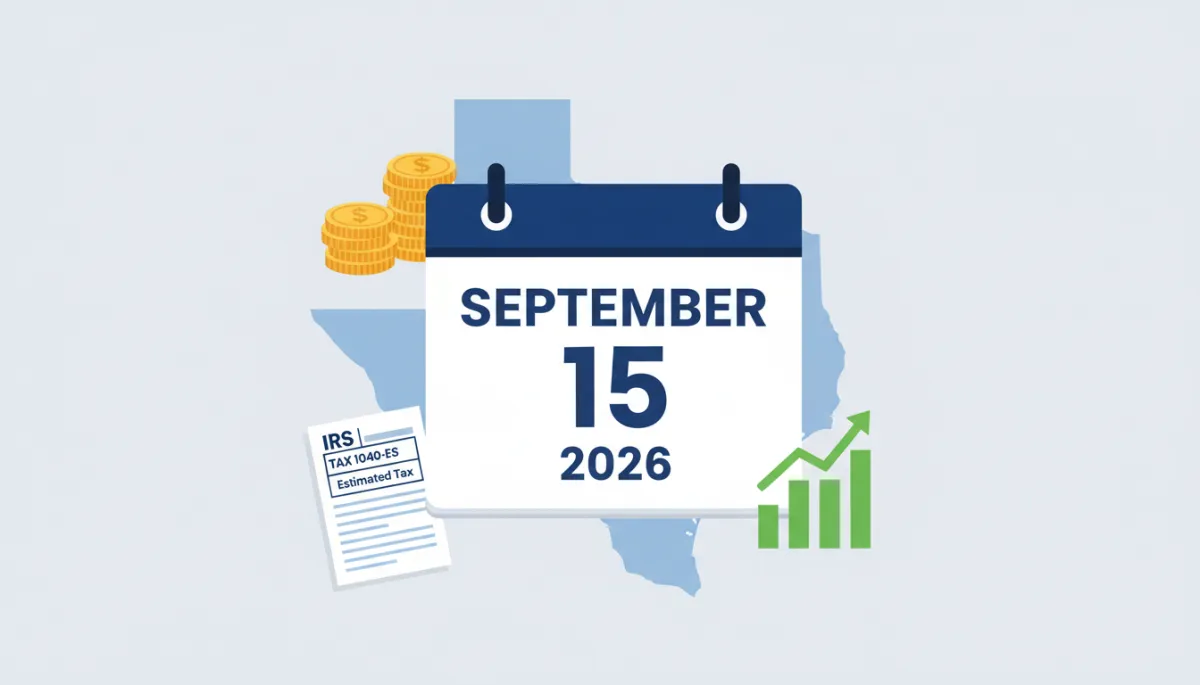
The third-quarter IRS estimated tax payment deadline of September 15, 2026 is approaching quickly, and self-employed Texans in Fort Worth cannot afford to ignore it. Whether you are a rideshare driver on West 7th, a designer working from a Near Southside co-working space, or a 1099 contractor serving local oil and gas companies, missing this date can trigger penalties and stress that are completely avoidable with the right planning.
Quarterly estimated taxes in Texas are a federal obligation for anyone earning income without regular withholding, and Fort Worth freelancers are squarely in that category. The IRS expects you to pay as you go; waiting until April 2027 to deal with 2026 income can result in underpayment penalties, even if you ultimately pay your full balance. Understanding how IRS estimated tax payments work now will help you protect your cash flow and keep your Fort Worth small business on solid ground.
Who Must Pay Quarterly Estimated Taxes?
The IRS requires estimated payments when you expect to owe at least $1,000 in tax for the year after subtracting any withholding and refundable credits. In practice, that includes many people handling self-employed taxes in Fort Worth, especially those who receive Form 1099 instead of a W-2. If you live or work in Tarrant County and your income is not regularly taxed through payroll, you are likely in this group.
- Freelancers and independent professionals – writers, graphic designers, consultants, IT specialists, and other project-based workers serving Fort Worth clients.
- 1099 contractors in Fort Worth, Texas – real estate agents, construction subcontractors, home-health providers, and other independent contractors who receive 1099-NEC or 1099-MISC forms instead of paychecks with withholding.
- Gig economy workers – rideshare and delivery drivers, short-term rental hosts, and app-based service providers who rely on platforms that generally do not withhold federal tax.
- Owners of Fort Worth small businesses – single-member LLCs, sole proprietors, and partners in local partnerships that pass income through to individual owners.
If you fall into one of these categories and do not have enough tax withheld from another job or from a spouse’s paycheck, you are exactly who the quarterly estimated tax system is designed for. Ignoring it does not make the obligation disappear; it only increases your risk of penalties and a painful surprise at tax time.
2026 Quarterly Tax Deadlines for Self-Employed Texans
For 2026, the IRS has set four standard quarterly deadlines for individuals who must make quarterly estimated taxes in Texas (and all other states). These dates apply whether you are a gig worker in Fort Worth or a consultant serving clients nationwide:
- 1st Quarter (income earned January 1 – March 31): April 15, 2026
- 2nd Quarter (income earned April 1 – May 31): June 15, 2026
- 3rd Quarter (income earned June 1 – August 31):September 15, 2026
- 4th Quarter (income earned September 1 – December 31): January 15, 2027
The upcoming estimated tax payments September 15 deadline is especially important because it covers the busy summer months when many Fort Worth freelancers and gig workers see higher income. Failing to make your Q3 payment can cause underpayment penalties to build even if you catch up later in the year, because the IRS calculates penalties quarter by quarter, not just on your total annual tax.
How to Calculate Your Quarterly Estimated Tax Payment
The IRS provides Form 1040-ES, Estimated Tax for Individuals, with worksheets to help you estimate your annual income and tax. For many Fort Worth self-employed professionals, the process involves three main steps: estimating net income, calculating self-employment tax, and then estimating income tax on top of that amount.

Clear quarterly calculations help Fort Worth freelancers avoid costly IRS surprises.
1. Estimate your annual net self-employment income
Start with your expected total income from freelancing, 1099 work, and business activities for 2026. Subtract ordinary and necessary business expenses such as software, supplies, mileage, home office, and professional fees. The result is your estimated net earnings from self-employment.
2. Calculate self-employment tax (15.3%)
For 2026, the self-employment tax rate remains 15.3% on net earnings up to $184,500, which includes 12.4% for Social Security and 2.9% for Medicare. This self-employment tax for Fort Worth, TX residents applies regardless of Texas’s lack of state income tax. High earners may owe additional Medicare tax, but many local freelancers fall below that threshold.
As a rough illustration, if you expect $80,000 in net self-employment income for 2026, your self-employment tax would be approximately 15.3% of that amount. Form 1040-ES walks you through the exact calculation and also reminds you that you can deduct half of this tax as an adjustment on your income tax return.
3. Estimate your income tax and divide by four
After adding your self-employment tax to your projected income tax, subtract any credits and withholdings from other sources. The remaining balance is what you expect to owe for the year. Divide that figure by four to arrive at an even quarterly payment amount. If your income is highly seasonal, you may choose to use the annualized income method described in IRS Publication 505 to better match payments to your actual earnings by quarter.
Safe Harbor Rules: Avoiding IRS Underpayment Penalties
The IRS does not expect perfection in your estimates, but it does expect a reasonable effort. Safe harbor rules give Fort Worth taxpayers a clear target to avoid underpayment penalties, even if the final tax bill ends up higher than expected.
- Pay at least 90% of your current year tax liability through a combination of withholding and estimated payments; or
- Pay at least 100% of your prior year tax liability (110% for some higher-income taxpayers) in equal quarterly installments.
For example, if your total 2025 tax was $8,000, making four payments of $2,000 in 2026 will generally keep you within the safe harbor, even if your actual 2026 tax ends up being higher. This approach can be especially helpful for Fort Worth freelancers whose income is growing but still unpredictable. A careful review of last year’s return with a professional can help you set safe harbor targets that protect you from penalties while you scale your business.
Texas Advantage: No State Income Tax, But Don’t Celebrate Yet
Living and working in Fort Worth comes with a major tax advantage: Texas has no state income tax. That means your quarterly estimated payments are focused solely on federal obligations, unlike freelancers in many other states who must also send payments to a state revenue department. This can simplify planning and improve your net take-home income.
However, it is important not to mistake this benefit for a free pass. The federal government still fully applies income tax and self-employment tax. The 15.3% self-employment tax rate, plus your regular income tax bracket, can easily push your combined federal rate above 25% or 30% depending on your income level. Smart Fort Worth entrepreneurs treat the Texas advantage as an opportunity to save or reinvest more, not as a reason to ignore their federal responsibilities.
Common Mistakes Fort Worth Self-Employed Workers Make
Even experienced 1099 contractors in Fort Worth, Texas can run into trouble with quarterly payments. A few recurring issues show up again and again when reviewing local Fort Worth small business taxes:
- Not setting aside enough for taxes. Treating every payment from a client as “spendable” income leads to shock when quarterly or annual tax bills arrive. A disciplined approach is essential.
- Missing the September 15 deadline. The Q3 date often sneaks up on busy freelancers juggling projects, school schedules, and late-summer travel. Penalties can accumulate even if you pay in full by April.
- Failing to track deductible expenses. Without accurate records for mileage, supplies, software, and home office costs, you may overstate your net income and overpay both income and self-employment tax.
- Ignoring IRS notices. If you fall behind on IRS estimated tax payments, letters and notices will follow. Delaying a response typically increases penalties and interest.
Smart Strategies to Stay Ahead of Quarterly Payments
With the September 15, 2026 deadline approaching, now is the time for Fort Worth freelancers and small business owners to put better systems in place. These practical strategies can help you stay ahead of your quarterly obligations and reduce stress throughout the year.
Open a dedicated tax savings account
One of the most effective habits for managing self-employed taxes in Fort Worth is to separate tax money from operating cash. Consider opening a savings account at your preferred Fort Worth bank or credit union and transferring a set percentage—often 25% to 30%—of every payment you receive. By the time each quarterly deadline arrives, you will already have most or all of the money ready to send to the IRS.
Track income and expenses monthly
Instead of waiting until year-end, review your income and expenses every month. Use bookkeeping software or even a well-organized spreadsheet to categorize transactions. This habit makes it far easier to update your 1040-ES estimates, claim every legitimate deduction, and adjust your quarterly payments if your Fort Worth business grows faster than expected.
Work with a local tax professional who knows Fort Worth
While IRS publications and forms provide general guidance, many self-employed Texans prefer personalized advice. Partnering with a local advisor who understands both federal rules and the realities of running a business in Fort Worth can make a significant difference. A firm such as IKAR Tax and Investments Inc can help you interpret safe harbor rules, review your prior-year return, and set up a realistic quarterly payment plan that fits your cash flow and goals.
In addition, a trusted advisor can coordinate your estimated payments with retirement contributions, health insurance deductions, and other planning opportunities that may be especially valuable to freelancers and gig workers who do not have access to traditional employer benefits.
As September 15, 2026 approaches, taking action now can protect your Fort Worth business from unnecessary penalties and keep your finances on track. Reviewing your income, updating your 1040-ES calculations, and setting aside funds for your quarterly estimated taxes in Texas will help you meet the Q3 deadline with confidence. If you would like professional support, IKAR Tax and Investments Inc offers guidance tailored to freelancers, gig workers, and small business owners across Fort Worth. You can schedule a visit at 4200 South Fwy., Suite 2520, Fort Worth, TX 76115, review their Google Business Profile, or call directly at (817) 305-3433 to discuss your situation before the September deadline passes.
