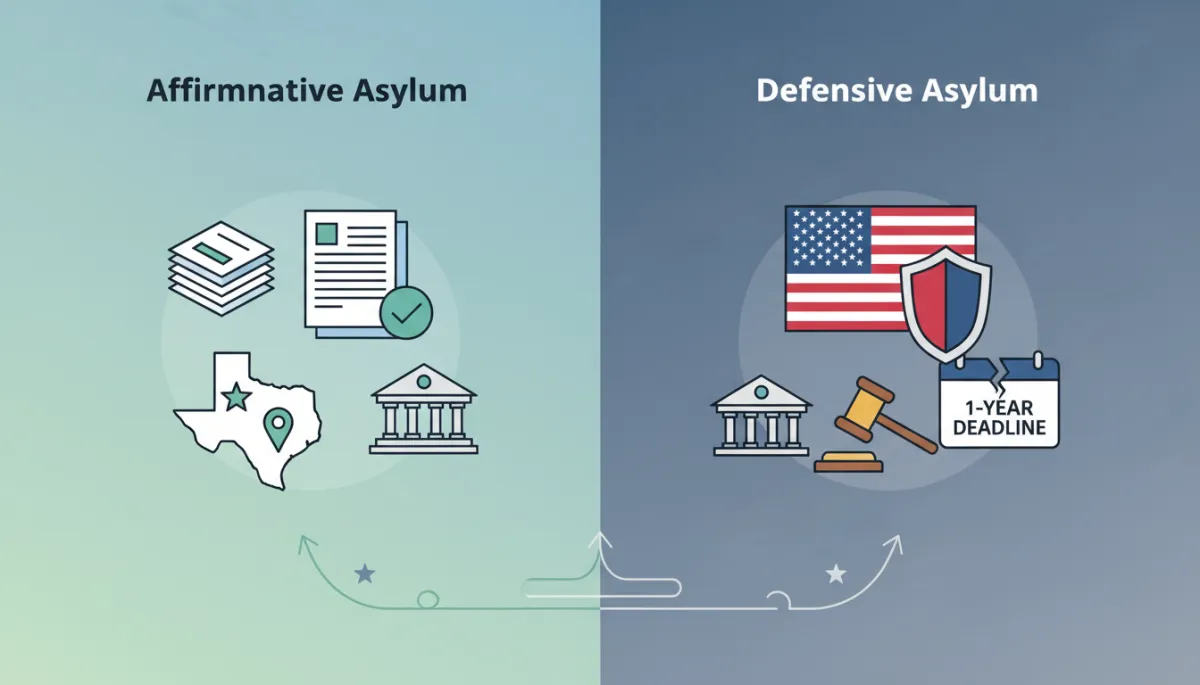
Affirmative vs. Defensive Asylum in Texas
Immigration Services, Asylum, Fort Worth DFW
Affirmative vs. Defensive Asylum in Texas: Key Differences and Strategies
Understanding the difference between affirmative and defensive asylum is essential for families in Fort Worth and the broader DFW area who are seeking protection in the United States. This guide explains both paths, how they work in Texas, and practical strategies to protect your rights in a challenging enforcement environment.

What Is Affirmative Asylum in Texas?
Affirmative asylum is requested proactively by someone who is already inside the United States and is not currently in removal (deportation) proceedings. In Texas, as in the rest of the country, these cases are filed with U.S. Citizenship and Immigration Services (USCIS) using Form I‑589. The applicant is asking the government for protection before being placed in immigration court.
To qualify, you must be physically present in the U.S. and show that you suffered persecution in the past, or have a well‑founded fear of future persecution, because of your race, religion, nationality, political opinion, or membership in a particular social group. This standard comes directly from federal asylum law and USCIS guidance (USCIS Asylum).
What Is Defensive Asylum in Texas?
Defensive asylum is requested as a defense against deportation in immigration court. In Texas, these cases are heard by immigration judges with the Executive Office for Immigration Review (EOIR), often in courts located in Dallas, Fort Worth, and other major cities. You typically reach this path after:
- Being detained or arrested by immigration authorities at the border or inside the U.S., or
- Having an affirmative asylum case denied and then being referred to immigration court.
In defensive cases, asylum is one of several forms of relief that your attorney may raise to prevent removal. The legal standard for protection is the same, but the setting is more formal and adversarial, with a government trial attorney arguing for removal (DOJ Defensive Asylum Process).
Who Qualifies for Asylum – Key Requirements
Whether you pursue affirmative asylum in Texas or raise asylum defensively in immigration court, you must prove:
- You are outside your home country and unable or unwilling to return because of persecution or a real risk of serious harm; and
- The harm is linked to at least one protected ground: race, religion, nationality, political opinion, or membership in a particular social group.
Families in the Fort Worth and DFW area often have complex histories involving gangs, domestic violence, political unrest, or religious discrimination. A qualified asylum lawyer in Fort Worth can help identify the correct “social group” or political basis for your claim and connect your story clearly to U.S. law.
The One‑Year Filing Deadline and Exceptions
In most cases, asylum applications must be filed within one year of your last entry into the United States. This rule applies in Texas just as it does nationwide. Missing this deadline can be fatal to an asylum case unless you qualify for a legal exception, such as:
- Changed circumstances in your home country (for example, a new government or increased violence against your group), or in your own life (such as conversion to a new religion).
- Extraordinary circumstances like serious illness, trauma, or being a minor without a responsible adult to help you file.
Recent policy changes, including the new Annual Asylum Fee (AAF) that can lead to rejection of a pending application if unpaid, make timing and compliance even more critical in Texas. Families in DFW should seek guidance quickly after arrival to protect their eligibility and avoid missing this strict deadline.
Asylum Interview vs. Immigration Court Hearing
An affirmative asylum interview in Texas is usually held at a USCIS asylum office, sometimes requiring travel from Fort Worth or DFW to another city. The setting is more private and non‑adversarial. An asylum officer asks detailed questions about your history, your fear, and your evidence. Traditionally, this was a key opportunity to explain your case in a calmer environment.
However, as of July 28, 2026, a new federal rule allows USCIS to refer some cases to immigration court without holding an interview when they believe the application is clearly barred or lacks merit (91 FR 47101). For Texas applicants, this means your written application and evidence must be strong from the very beginning, because you may not get a chance to clarify your story with an officer before being sent to court.
By contrast, a defensive asylum hearing in immigration court in Texas looks more like a trial. You, your attorney, and any witnesses testify under oath. A government lawyer questions you and challenges your evidence. The judge makes a final decision on your asylum claim and any other forms of relief. Court calendars in Texas are extremely crowded, and hearings can be rescheduled multiple times, adding stress and uncertainty for DFW families.

Well‑organized documents can make a decisive difference in both interviews and court.
Evidence and Documentation Strategies for Texas Asylum Cases
Strong evidence is essential whether you are in the affirmative asylum process or fighting your case defensively in immigration court Texas. Helpful documentation may include:
- Police reports, medical records, or court documents from your home country showing threats or harm.
- Letters or sworn statements from witnesses, family, or community leaders who know what happened to you.
- Country condition reports from reliable sources that confirm persecution against people like you.
- Proof of your identity, such as passports, national IDs, or birth certificates.
Because USCIS can now send some affirmative cases directly to court without an interview, it is vital to submit a clear, consistent personal declaration with supporting documents from the start. Families working with a DFW immigration professional can organize evidence in a way that is easy for officers and judges to follow, reducing confusion and credibility problems later.
Credible Fear Screening at the Border or After Arrest
Many defensive asylum cases in Texas begin with a credible fear interview. This screening happens when someone is stopped at the border or detained inside the U.S. and expresses fear of returning home. An asylum officer decides whether there is a “significant possibility” that the person could qualify for asylum or related protection in a full hearing later.
Passing credible fear does not grant asylum, but it usually allows you to present your case in immigration court. In Texas, where new state laws increase cooperation between sheriffs and ICE, more people may face detention and credible fear screenings. It is important to be honest, specific, and consistent during this interview, because any contradictions can be used against you later in court.
What Happens If Your Asylum Case Is Denied?
In an affirmative asylum case, if USCIS denies your application and you do not have another valid status, your case is usually referred to immigration court. There, you can apply again for asylum defensively and present your evidence to an immigration judge. The court is not bound by the asylum officer’s earlier view, but the officer’s notes can be part of the record.
In a defensive asylum case, if the immigration judge denies asylum and any other requested relief, the judge will enter an order of removal. You may have the right to appeal to the Board of Immigration Appeals and, in some cases, to a federal court. These appeals are complex and time‑sensitive, and Texas courts are handling a very high volume of immigration cases, so quick action is essential.
Practical Guidance for Fort Worth and DFW Families
The current Texas environment is highly enforcement‑oriented. Laws such as SB 4 and SB 8 increase coordination between local police, sheriffs, and federal immigration authorities, which can lead to more arrests and faster movement into immigration court. For families in Fort Worth, Arlington, Dallas, and surrounding DFW communities, careful planning is essential.
- Act early. Do not wait until you are arrested or placed in removal proceedings. If you may qualify for affirmative asylum Texas, explore filing as soon as possible, ideally well before the one‑year deadline.
- Prepare for both paths. Even if you file affirmatively, understand that your case could be referred to court, especially under the new rule allowing referrals without an interview. Organize your documents from day one as if a judge will review them.
- Stay informed about fees and notices. The Annual Asylum Fee and other USCIS requirements can cause a pending case to be rejected if overlooked. Open all mail and keep your address updated.
- Seek local support. Community organizations, faith groups, and local professionals in Fort Worth and DFW can help you gather evidence, translate documents, and attend hearings.
IKAR Tax and Investments Inc. understands that asylum questions often arise alongside tax, business, and family planning issues. Having support from a trusted local team can make it easier to keep your financial and immigration documents consistent and organized for both USCIS and immigration court Texas proceedings.
Moving Forward with Confidence in Your Asylum Journey
Choosing between affirmative and defensive asylum is not always in your control, but understanding both paths helps you prepare for what comes next. For many families in Fort Worth and the wider DFW region, the most important steps are filing on time, telling a consistent and truthful story, and keeping your documents in order. When you combine this preparation with knowledgeable local guidance, you increase your chances of being heard fairly in a system that is often rushed and overloaded.
If you or a loved one in the DFW area are considering asylum or already have an immigration court date, you do not have to navigate these decisions alone. You can learn more about how IKAR Tax and Investments Inc. supports families with immigration‑related planning by visiting https://ikartaxandinvestments.com or by calling (817) 305-3433 to speak with the team. Their Fort Worth office at 4200 South Fwy., Suite 2520, Fort Worth, TX 76115 is conveniently located for DFW residents, and you can also review client feedback and directions through their Google Business Profile. Taking the time now to understand affirmative asylum Texas options, defensive asylum strategies, and local court expectations can help you protect your family’s future in the United States.